Gemini & Vertex AI, fully supported
Mnemosyne OS is 100% compatible with Google's model stack, through both doors: the Gemini API (Google AI, one key and you're in) and Vertex AI (the Google Cloud enterprise route). Several of the OS's abilities run best, or only, on them.
What runs on these routes
-
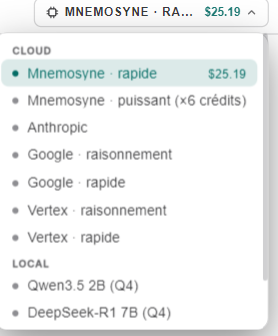
Thinking. The model pill offers four Google-powered brains out of the box: Google · reasoning, Google · fast, Vertex · reasoning, Vertex · fast. Switchable per message, mid-conversation, with the price in plain sight.
-
The zero-config start is Gemini. The sponsored free-credits route itself reasons on Gemini (Flash-Lite), so the easiest way into Mnemosyne OS is already Google-powered.
-
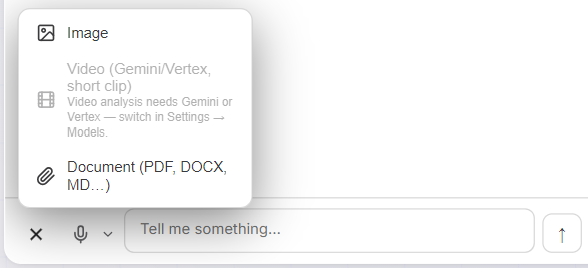
Video understanding. Analyzing a video clip in chat requires a Gemini or Vertex route. It's the door that unlocks full multimodality.
-
Cloud semantic memory. If you choose the cloud or hybrid route for the cognitive engine, Vertex embeddings are among the engines that can power semantic recall.
Bring your own Google
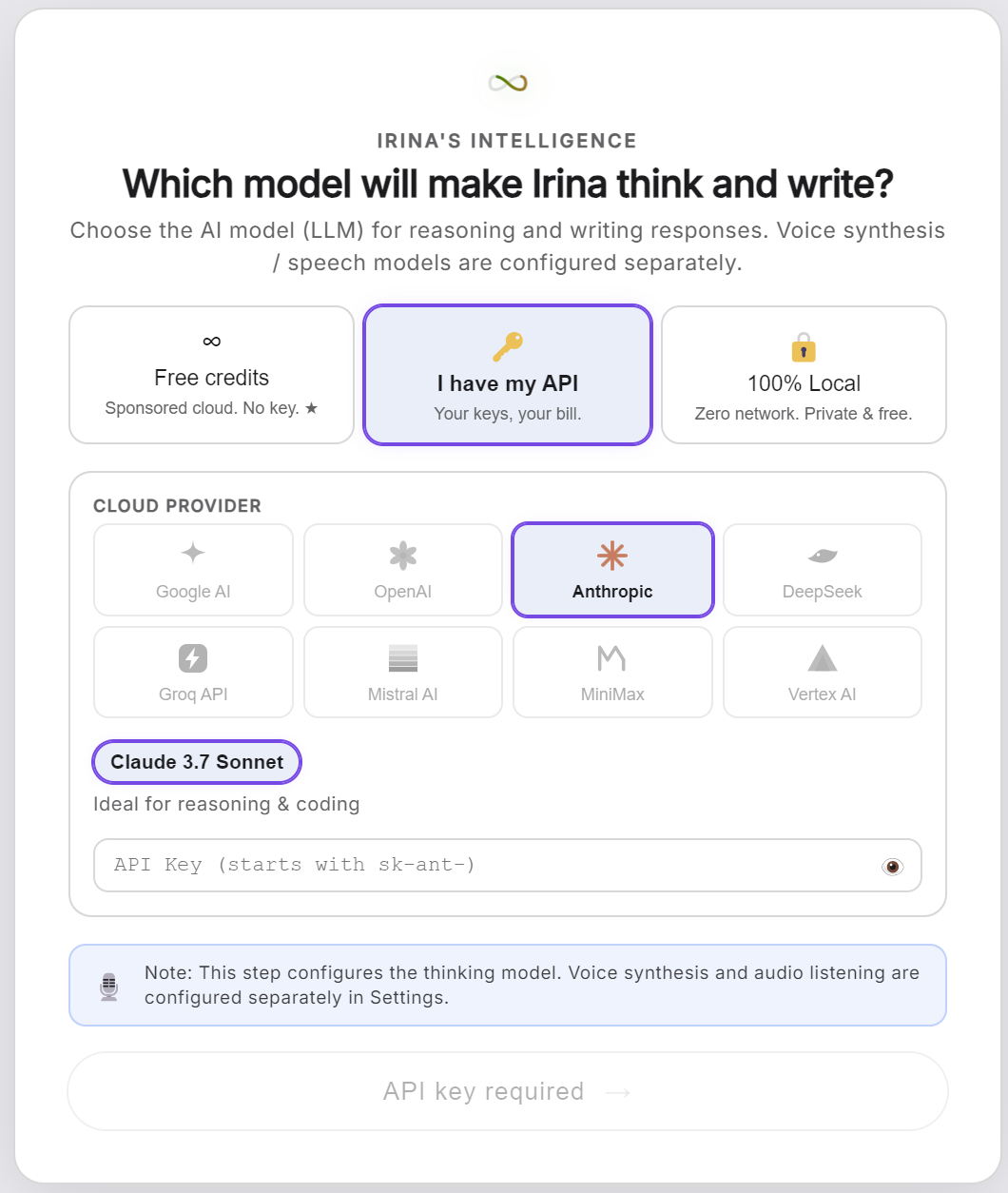
In Settings → AI & Models (or during onboarding), pick Google AI and paste your Gemini API key, encrypted on your machine. Or pick Vertex AI to route through your own Google Cloud project.
Why Vertex matters if you're an organization: the calls run through your GCP project, so your billing, your region and your data-governance controls apply. And either way, the memory itself never moves. Vaults, chronicles and indices stay on your machine, and only the reasoning requests travel on the route you chose.
Mnemosyne OS is an independent product. It is not affiliated with or endorsed by Google, Google DeepMind or Google Cloud. It speaks their APIs fluently, which is exactly what you want from a sovereign tool.