BMAD 2.0
Four letters, four steps: Brief, Mapping, Architecture, Delivery. BMAD takes an idea you can only say out loud and walks it into a scoping document you can hand to someone, then generates the deliverables from it: Markdown specs, an SVG architecture diagram, an HTML slide deck. It is free on MnemoHub, and it is open source (MIT).
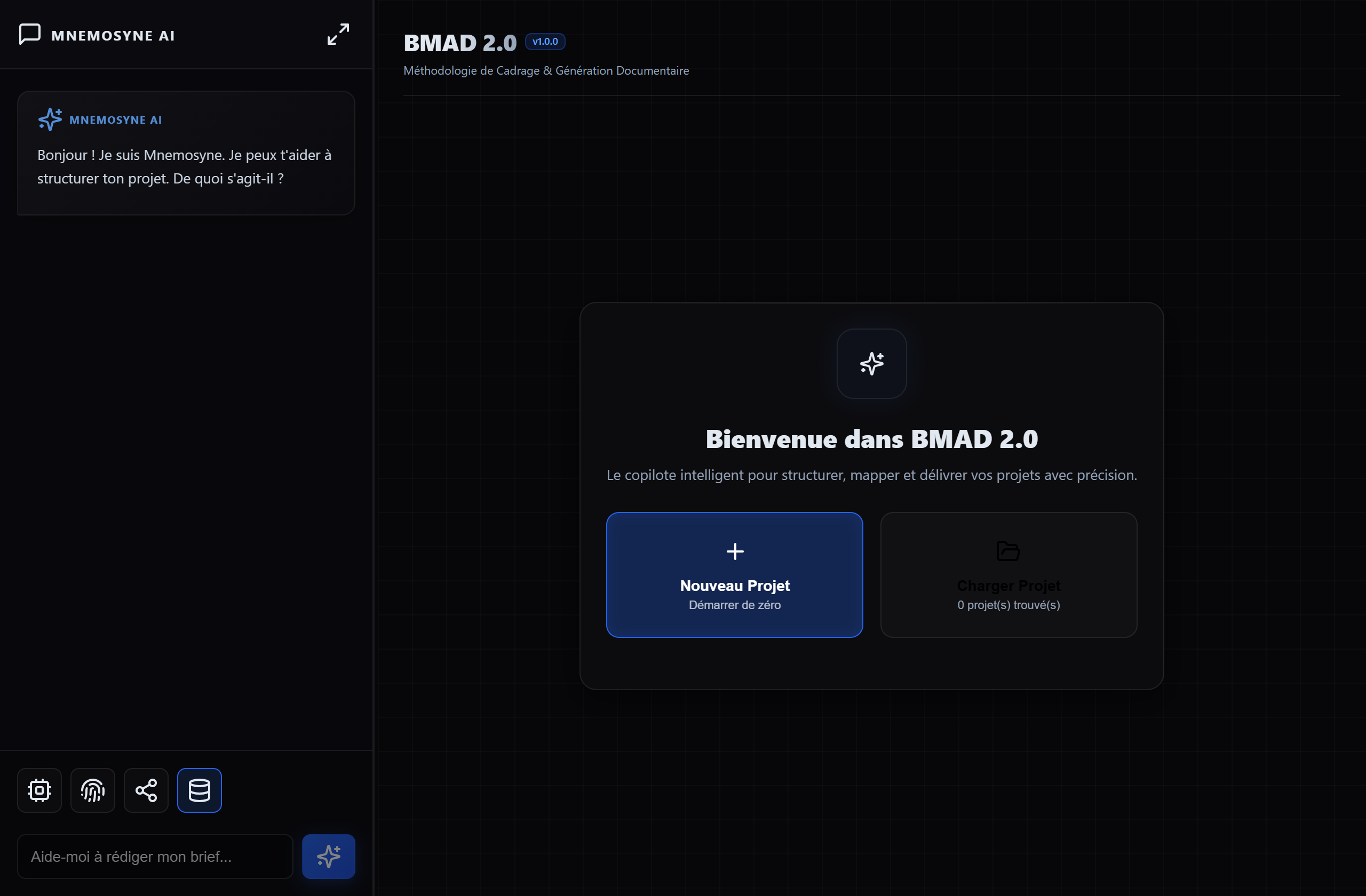
The copilot sits in the left rail from the first screen, before you have typed anything, because the hardest field in any scoping document is the first one.
Start with an identity card
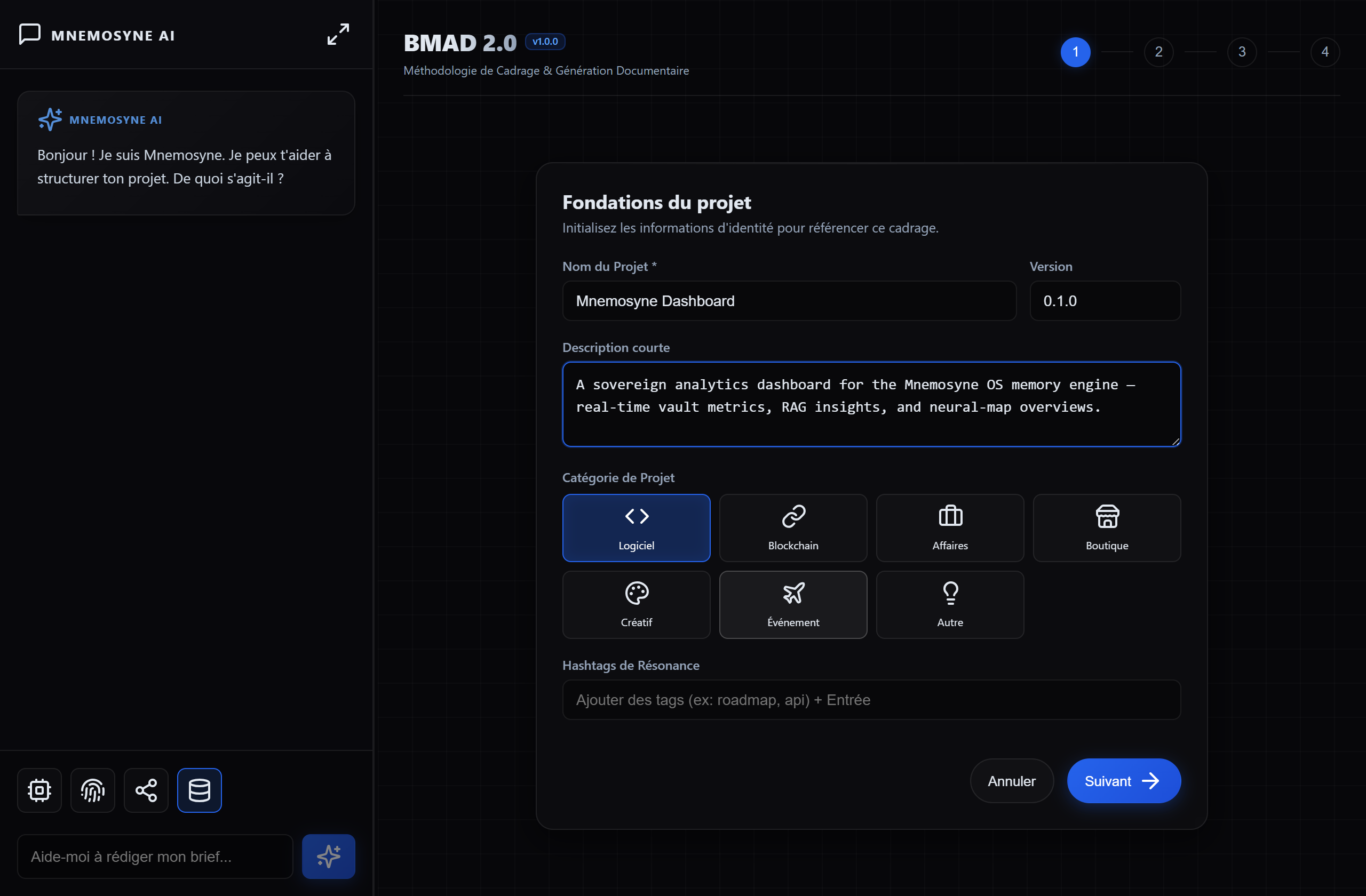
A project opens on its foundations: name, version, a short description, a category (software, blockchain, business, shop, creative, event) and resonance hashtags. This is not paperwork. It is what makes the project findable by meaning months later, when you remember the shape of an idea and not its name.
The four tabs
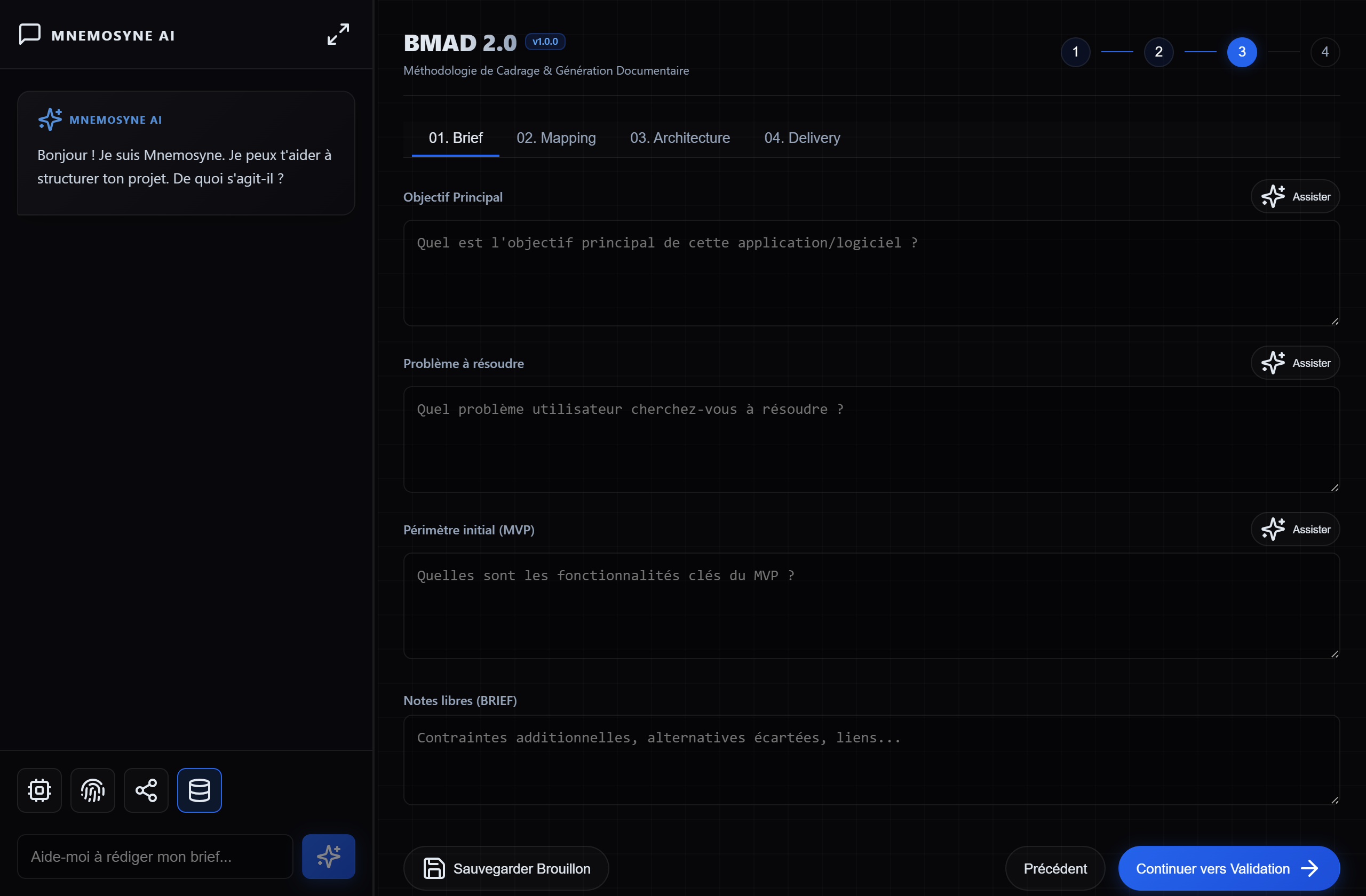
Brief holds the objective, the problem and the MVP scope. Mapping adds the actors, the resources, the risks and the dependencies. Architecture and Delivery follow. Every field carries a one-click assist that drafts it or sharpens what you wrote, and the sidebar copilot answers in plain language while you work.
The order matters more than the fields: you cannot write a delivery plan for a problem you have not stated, and BMAD makes that sequence visible instead of leaving it to discipline.
Then it produces something
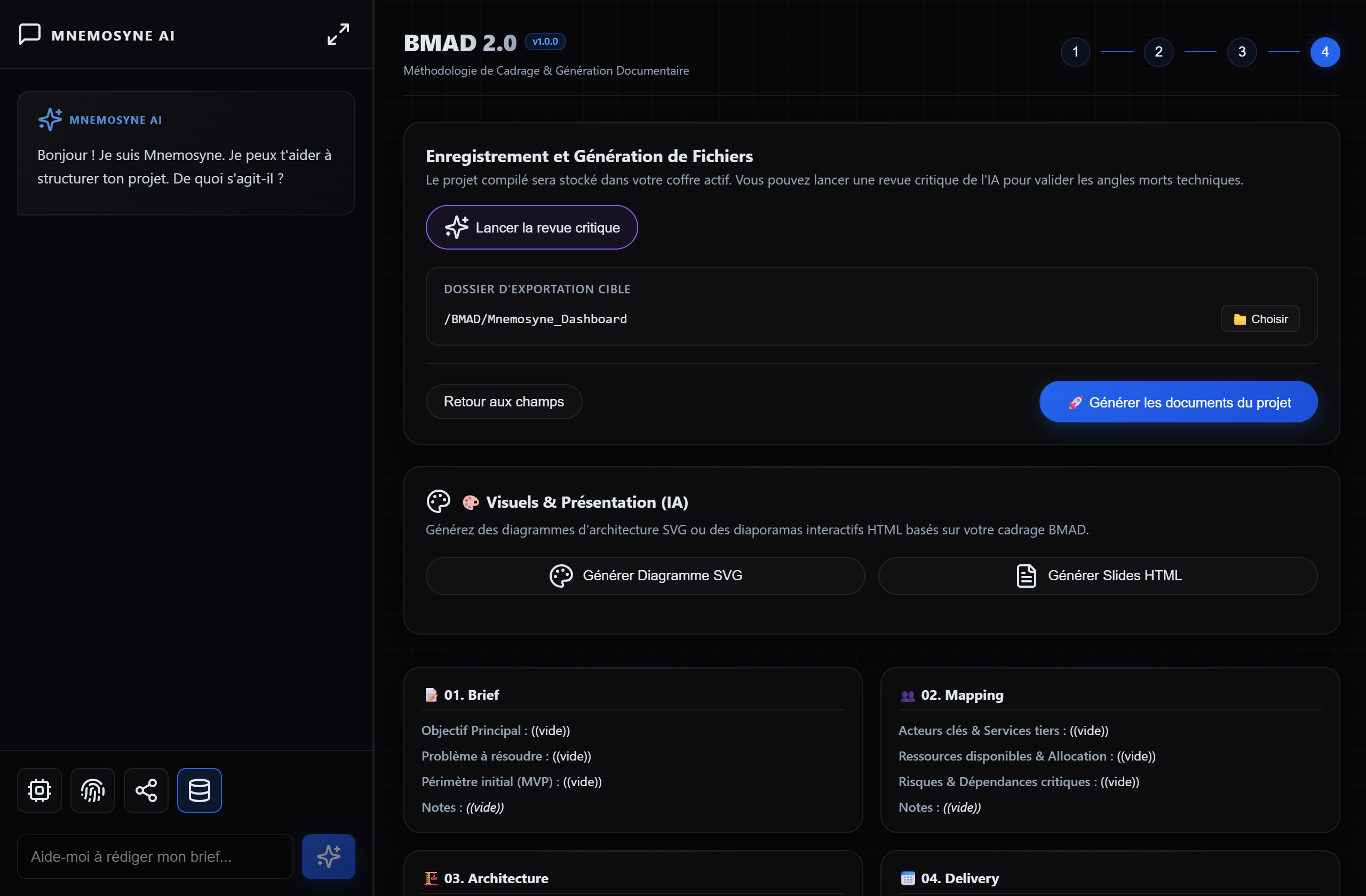
Compile the scoping into your active vault, run the critical review, which is the copilot hunting for what you did not think of, and generate the deliverables. Markdown documents, an architecture diagram as SVG, or an interactive HTML deck, all built from the same scoping rather than written a second time.
Where the intelligence comes from
BMAD owns the data and Mnemosyne OS owns the intelligence, which is the whole point of a cartridge. Each scoping is compiled into a chronicle inside a walled app-sandbox vault, isolated from the rest of your memory until you decide otherwise. From there the core engine does the work: the copilot and the per-field assist, the document and diagram generation, and semantic recall, so a past project is found by what it was about.
The intelligence comes to the data. Nothing leaves your machine unless you pick a cloud model yourself, which some people do for richer diagrams and slides.
Trilingual, and it follows the OS
The interface is EN, FR and ES, kept in step with the language of Mnemosyne OS. The screenshots on this page happen to be in French, which is the language they were captured in.